Inventing Interactive

Archived entries for

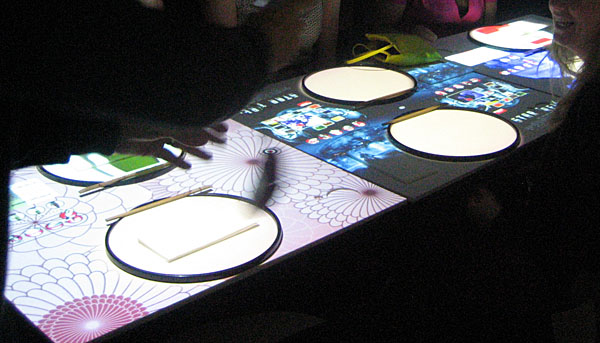
Novelty Dining in London

Inamo

Last year I was in London with some friends and we ended up having dinner at Inamo in SoHo. They’ve developed an interactive ordering system that uses your entire table as a display, using ceiling-mounted projectors The basic dilemma with these sorts of restaurants is that the novelty, whatever it may be, is what attracts people to the restaurant. And because the novelty is unlikely to become a standard in all restaurants, it draws attention…
 
Read the rest…

Keyboard Refinements

Dialkeys

After my post about the fluidity of using the Symbolics keyboard, I thought Phil Gyford’s recent post about typing speeds on different devices, Pen v keyboard v Newton v Graffiti v Treo v iPhone, was very cool. As an experiment, he entered the same paragraph of text into using six different devices to see which was fastest. Sure – it’s a sample of just one person – but it’s so interesting to see that, despite…
 
Read the rest…

Realism Doesn’t Work

A beautifully abstract console in 2001.

Lukas Mathis, for UX Magazine, recently wrote an interesting article: Realism in UI Design. It takes some of the ideas from Scott McCloud’s “Understanding Comics” (a book I remember making a big impact in the UI world when it first came out) — and looks at those concepts apply to UI design. The examples he gives are fairly basic (home buttons, general button styles, and the role of icons) — but they’re fundamental to UI….
 
Read the rest…

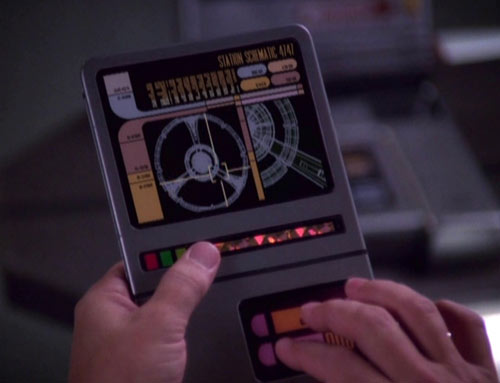
Star Trek: PADDs

Smaller pad with hard buttons

On the eve of the rumored announcement of an Apple Tablet, I started thinking about similar devices in Star Trek. In Trek lingo they are referred to as PADDs. For a show made in the 60s and 80s it’s interesting to see how their conception changed over time. In the original show the earliest padds were pretty basic, like clip-boards that the crew could carry around — making notations with a stylus. In The Next…
 
Read the rest…

Symbolics Keyboard

Symbolics Keyboard, from Wikipedia

Back in the 80s there was an AI (artificial intelligence) boom – a euphoric time of specialized computers and the belief that we were going to be able to invent smart computer systems. It was after Xerox PARC‘s peak but before personal computers had the computing power that eventually put specialized high-end workstations on the path to extinction. My first job after college was in Boston at BBN — working in their AI and Experimental…
 
Read the rest…

Are Phones Leading OS Innovation?

Here’s a great piece on Engadget by Paul Miller: Editorial: 10 outdated elements of desktop operating systems. It’s a very interesting read, not just about the problems of existing desktop operating systems, but pointing out that some of the possible solutions are right in front of us. What’s cool is the degree to which phones are leading the development of new ways for us to use computers. Why? Phones are not encumbered by legacy software,…
 
Read the rest…

Rediscovering Yugop

Yugo Nakamura (click for an interview in Japanese)

If you’ve never seen the work of Yugo Nakamura, known online as Yugop, go immediately to his website www.yugop.com and take a look around. And if you have seen his work, it’s probably worth looking at again. Based in Japan, Yugo’s been doing amazing interactive work since the late 90′s. His work, primarily Flash-based, has an intimate sketch-like experimental quality. His projects are beautiful explorations of dynamics and interaction. With their understated tranquility, they reflect…
 
Read the rest…

Sketching in Code

Sketch for MoodLogic Magnet Browser, Triplecode

I’ve always been interested in high-level design tools as a means for designers to easily sketch ideas without getting stuck in production details. It’s too easy, and common, for a designer to create a sketch in Photoshop, or an initial wireframe, and then be reluctant to make large-scale changes to the design because of the effort involved in making those changes. You could start from scratch, but what you’ve got looks so polished that it’s…
 
Read the rest…

1963: Sketchpad

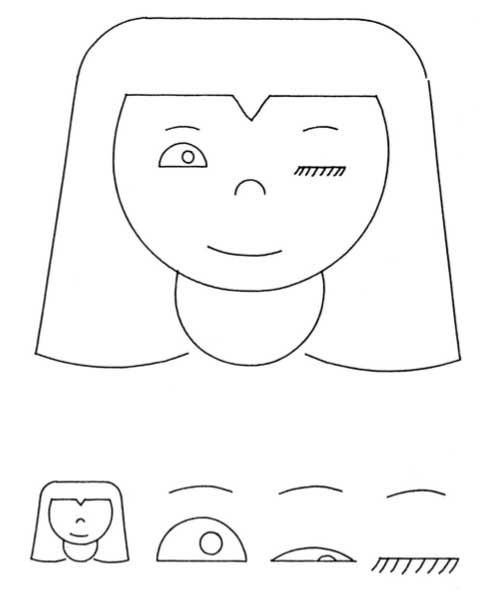
Winking Girl, from Sketchpad thesis.

Today, in the US, is a holiday celebrating Martin Luther King Jr. It was in 1963 that Dr. King gave his famous, and still relevant, I Have a Dream speach. What was happening with interactive media at that time? Well, most significantly, it was the same year that Ivan Sutherland published his PhD thesis at MIT –  for which he developed the revolutionary computer program Sketchpad. Sketchpad was the first program to have a graphic…
 
Read the rest…

Movie: Avatar

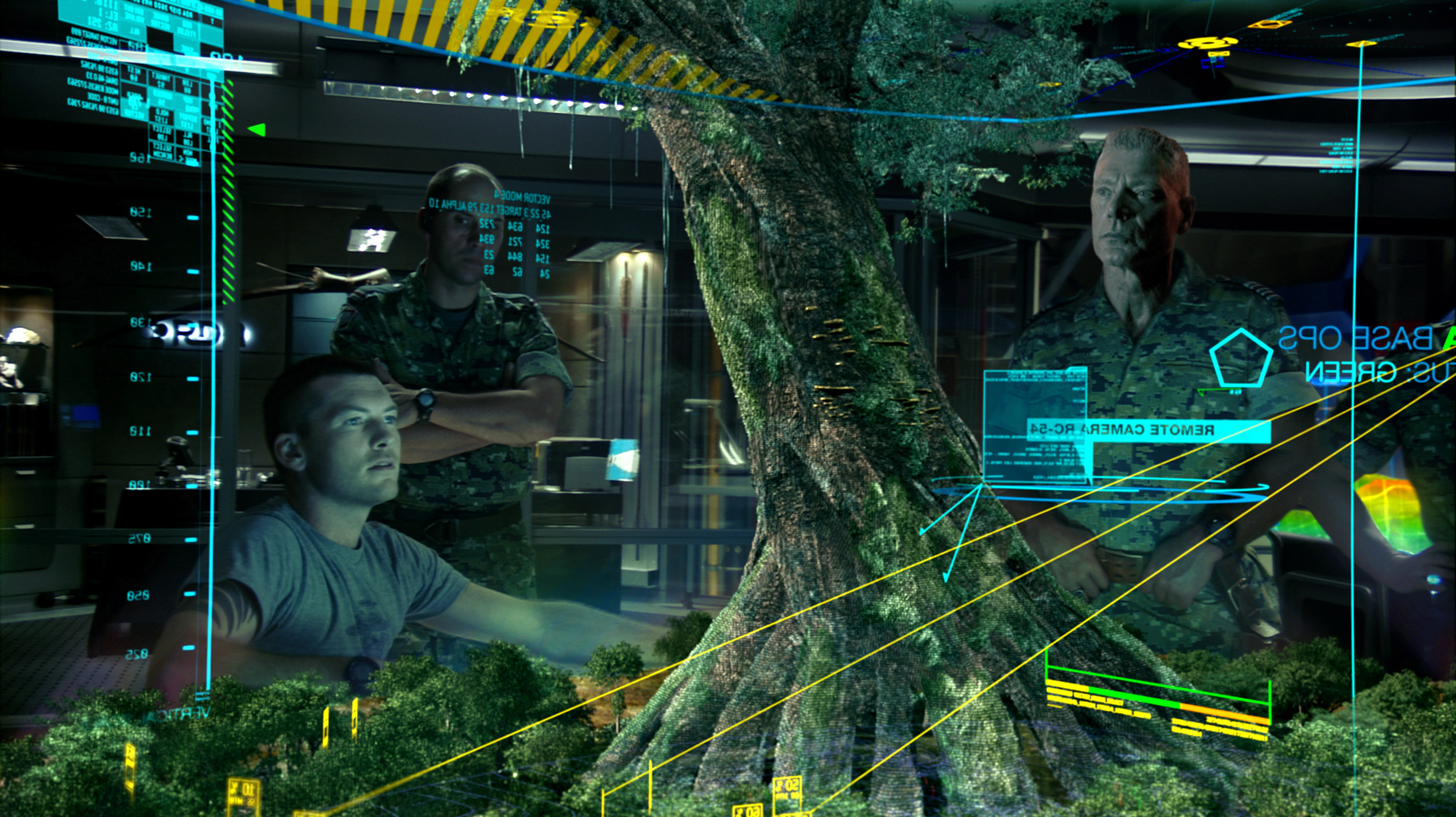
Avatar Holotable

It’s safe to bet that interface design in movies will be a recurring theme here. They give us a glimpse of the future, but from a design perspective of when the film was made. They take current ideas of where technology is heading, and project it forward to a point beyond what is currently possible. They’re full of imagination and fantasy — but still trying to make sense in that future context, and seem, hopefully,…
 
Read the rest…


 Home.   RSS Feed.    @i_interactive on Twitter. This blog is powered by Wordpress. The theme is based on Modern Clix. The "ii" logo is by TDOOKK.